
How to Search for a Warrant in Lee County
Start at Iowa Courts Online. It is a free public case index kept by Iowa clerk offices. It is not a complete active-warrant roster. Gather the legal name used in court, a case or citation number if you have one, the rough court date, the issuing agency, and the likely North or South venue. Share identity details only when an official asks, so similar names stay separate. Work every Lee County warrant search channel you can reach before drawing any conclusion about what is outstanding.
- Search Lee County by case number, citation number, charge type, or name.
- Read events for appearance, failure to appear, warrant, bond, return, recall, or disposition.
- Call the correct North or South clerk and ask whether the warrant remains active.
- Call sheriff, jail, or non-emergency dispatch for service, custody, booking, and surrender routing.
- Use a narrow records request when the public index and direct calls do not supply the releasable record needed.
Lee County Warrant Search Has No Sheriff Portal
The county's own Sheriff Online Resources page points to court and safety links. It offers no Lee County warrant search form or public roster.
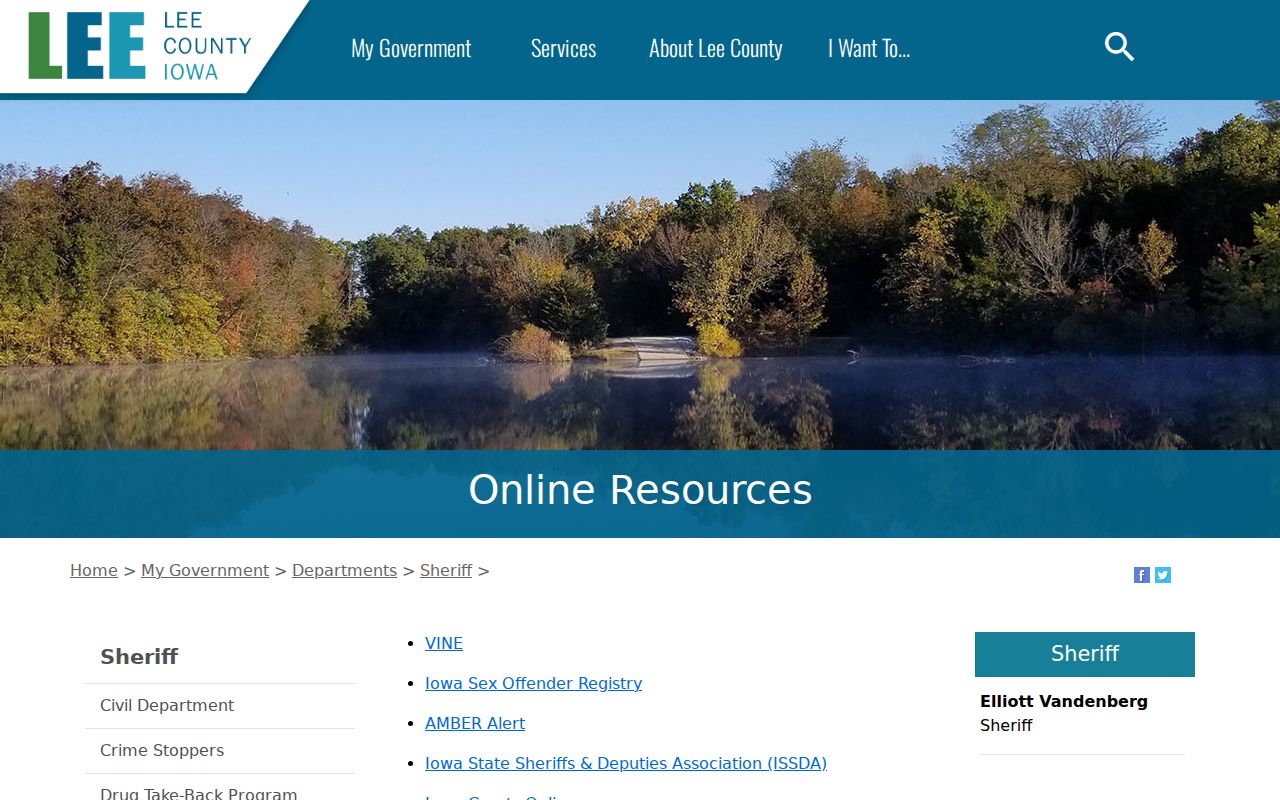
That gap makes direct confirmation essential. Iowa Courts Online supplies docket clues only. The clerk and the responsible agency can tell you whether a Lee County warrant is still operational. Remember that Crime Stoppers takes tips rather than running personal warrant checks, and the IOWA System stays restricted to authorized criminal-justice agencies.
Lee County Warrant Search Fields
The public interface searches court cases, not a local warrant card. A case or citation number is the strongest cross-reference when you have one. A name can substitute when the number is unknown, and county plus a general charge type narrows the results. The official sources publish no Lee County warrant-number pattern.
| Field Label | Type | Required | Notes |
|---|---|---|---|
| County | Selector | Yes | Choose Lee for county results. |
| Charge type | Selector | Context | Traffic, simple or criminal, or civil infraction. |
| Case or citation number | Text | No | Preferred when printed on a notice. |
| Name | Text | Alternative | Use the spelling on the court record. |
Lee County Warrant Search Uses Two Clerks
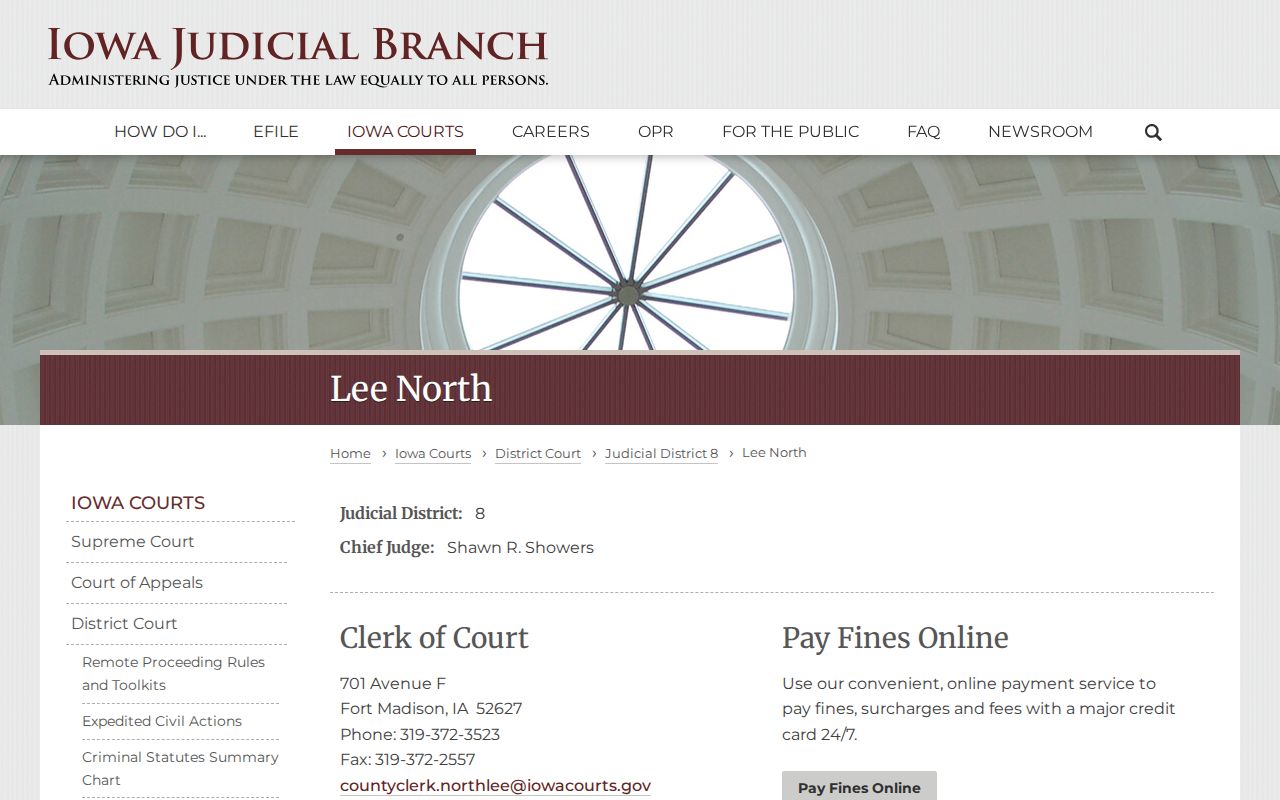
Lee County runs two administrative court locations inside one Iowa District Court system. Lee North sits at 701 Avenue F in Fort Madison, phone 319-372-3523. Lee South is at 25 North 7th Street, Suite 301, in Keokuk, phone 319-524-2433. The docket venue, not where a person now lives, tells you which Lee County clerk to call. The Lee North clerk page posts the Fort Madison contact details and its visitor rules.
Ask the clerk whether the docket shows an active failure-to-appear arrest warrant, which court issued it, and what action is required. Also ask whether a later order recalled or quashed it.
What a Lee County Warrant Search Returns
A case result may list filed events, but Lee County publishes no public status-code dictionary. Copy the court's identifier exactly. Read the whole chronology, because one isolated entry may describe an earlier stage rather than present warrant status.
| Reference | Use the official case number on file; never invent a warrant number. |
|---|---|
| Offense | Charge name, general description, or cited Iowa Code provision. |
| Issuing court | Lee North or Lee South venue and judicial action. |
| Bond | Warrant endorsement, court order, or later bond order. |
| Status event | Issued, transferred, served, returned, recalled, quashed, or disposed, when entered. |
Recent Lee County Warrant Cases Can Lag
The Iowa Judicial Branch warns that a citation can take 10 to 14 days or longer to reach the online system, especially after a weekend or holiday. That delay matters when the suspected Lee County warrant began with a recent ticket or a missed date. Running the same name search again will not fix a filing delay.
Search caution: A blank docket result is not a no-warrant certificate.
Call the correct clerk with the citation and appearance date, then ask whether the issuing agency has received any warrant or later status change.
Where Lee County Warrants Are Checked
The clerk keeps the court docket, while the Lee County Sheriff's Office, city police, or another peace officer may enforce process. The sheriff's general number is 319-372-1152, the jail is 319-376-2355, and LeeComm non-emergency dispatch is 319-372-1310. There is no separate public warrant-unit phone. Call the jail before any voluntary appearance, since intake hours, required identification, bond instruments, and payment methods are not published. The IOWA System, short for Iowa On-line Warrants and Articles, connects more than 450 agencies and NCIC. It serves authorized agencies only, not statewide public self-searches. To check a Lee County warrant, combine the court docket, the right clerk, and direct agency confirmation.
Lee County Warrant Records Request Route
The sheriff’s records-request instructions provide mail and email routes for a defined request.
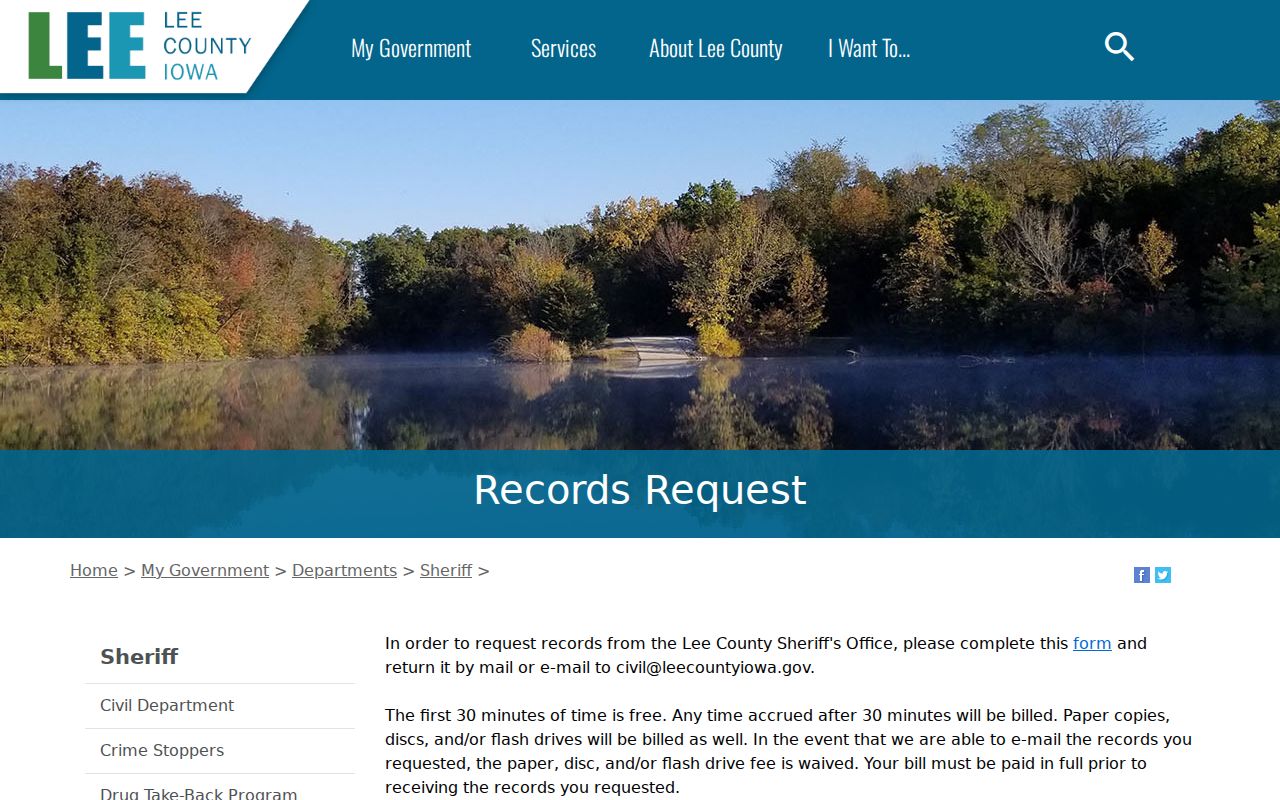
Describe the subject, the approximate date, the case or citation number, and whether you want current status or a copy. The first 30 minutes of preparation are free. Staff time beyond that is billed. Printed or faxed pages cost $1 each, and a CD, DVD, or flash drive costs $5. Email delivery may avoid media charges. Ordinary processing is stated as within 10 business days. A good-faith confidentiality review can take up to 20 calendar days, and a large request may run longer. Treat this as a records-access route, not an instant operational warrant check.
Access and Restricted Warrants
Iowa Code chapter 22 supports access to public records but sets limits. Ongoing investigative reports and criminal-identification files can be confidential, while current and prior arrest and criminal-history categories are public. Juvenile files stay generally confidential under section 232.149, and sealed court material stays outside normal public results in Lee County and statewide.
Key rules:
A sealed, juvenile, or newly filed Lee County warrant record may be absent from public search results.
Investigative material can be withheld under a statutory exception.
Only the issuing court and responsible agency can confirm current operational status.
Verify Lee County Warrant Payment Claims
A paid balance and a cleared warrant are two different things. That distinction trips up a lot of people in Lee County. Paying court debt through an official Judicial Branch channel does not, by itself, recall a Lee County warrant. Keep the receipt. Then ask the clerk whether the docket shows a recall or some other status order, and whether that change reached the agency that holds the warrant. Only the issuing court can confirm what the docket now says. Watch for scams, too. The Iowa Judicial Branch's 2026 warning is blunt: courts never demand prepaid cards, personal details, or payment through a supplied link under threat of arrest. Hang up. Call the official clerk or local law enforcement on your own. The same caution covers messages claiming you missed jury duty. A quick verification lets you deal with a real case without mistaking a caller for the court. If the matter is genuine, take it one question at a time. Ask the clerk what the balance covers, whether payment is even permitted, whether an appearance is still mandatory, and whether a judge must act on the warrant. Ask the sheriff or the issuing police agency for its current enforcement record. Date every answer, receipt, and order you receive. When the sources disagree, go back to the issuing clerk with the exact status the agency gave you and ask which court entry controls. A lawyer can then advise whether a motion, a scheduled appearance, or a coordinated surrender fits best. No single published Lee County procedure fits every warrant type, so the order in your specific case governs.
Lee County Warrant Search Verification Notes
A good verification call stays narrow and tied to the official case. Give the clerk the case or citation number, the legal name on the record, the rough court date, and the venue shown online. Then ask the questions that matter. Does the docket hold a warrant? Is it an arrest warrant for failure to appear, or some other order? Has a later entry changed it? Find out which office received the process and what the court requires next. Clerk staff in Lee County will explain the record and the procedures, though they cannot give personal legal advice. If city police started the matter, skip any hunt for a separate Lee County municipal-court database. Iowa files city citations and municipal infractions with the District Court clerk. Fort Madison and Keokuk cases go through the proper North or South venue. West Point, Donnellson, Montrose, and rural matters likewise turn on docket venue to identify the right clerk. The sheriff may enforce county process, but the sheriff's website does not prove it holds every city-originated warrant. Calling the sheriff takes its own framing. Say you are confirming your own warrant information or helping a relative who authorized the inquiry. Ask whether the general office can confirm status by phone or must route you elsewhere. Use the jail number for custody, booking, bond, and voluntary-appearance procedure, never for interpreting a court order. LeeComm is for non-emergency routing when the responsible agency is unclear. Last, write down the date and the office behind every answer. A court event can be newer than an agency screen. An agency return can be newer than the public docket view. If something conflicts, ask the issuing clerk how the court's order will reach the agency. That discipline beats searching the same public index over and over.