
Arrest Warrants in Lee County
A criminal case in Lee County often begins when someone files a complaint before a magistrate. Under Iowa Code section 804.1, that complaint and its supporting affidavit must establish probable cause that an offense occurred and that the named person committed it. The magistrate then issues an arrest warrant unless another authorized procedure applies. A citation can sometimes command an appearance instead of immediate custody. That shortcut comes with a condition. If the person willfully fails to appear after being served, the court may issue an arrest warrant for the original offense and apply the failure-to-appear process. The trigger differs, but both instruments can authorize an arrest in Lee County.
Probable Cause for Lee County Arrest Warrants
A Lee County magistrate looks at the charged offense and the facts sworn in the complaint or affidavit. If probable cause exists, the warrant issues. It directs a peace officer to arrest the defendant named or described in it. The criminal case then moves into court, where the allegations can be fought.
- A complaint identifies a public offense.
- Supporting facts are presented to a magistrate.
- The magistrate decides whether probable cause exists.
- A warrant or permitted alternative process is issued.
- After service, booking and an initial court appearance follow the applicable order.
What a Lee County Arrest Warrant Contains
Iowa Code section 804.2 sets out six required items. Lee County publishes no local warrant-card layout or warrant-number pattern of its own. The court case number is the safest cross-reference.
| Direction | Addressed to any peace officer in Iowa. |
|---|---|
| Defendant | Name if known, or a name unknown designation when permitted. |
| Offense | Name or general description of the alleged offense. |
| Issue date | Date the warrant was issued. |
| Place | County or city of issuance. |
| Judicial authority | Magistrate signature and name of office. |
Judicial Roles in Lee County Arrest Warrants
Iowa District Court is the state's unified trial court. In Lee County, judicial magistrates handle simple misdemeanors, scheduled violations, county and municipal infractions, initial appearances, and search warrants. District associate judges hold magistrate powers plus serious and aggravated misdemeanor, Class D felony, and other assigned jurisdiction. District judges can hear every case type. The Iowa Judicial Branch assignment explanation lays out these judge and magistrate roles.
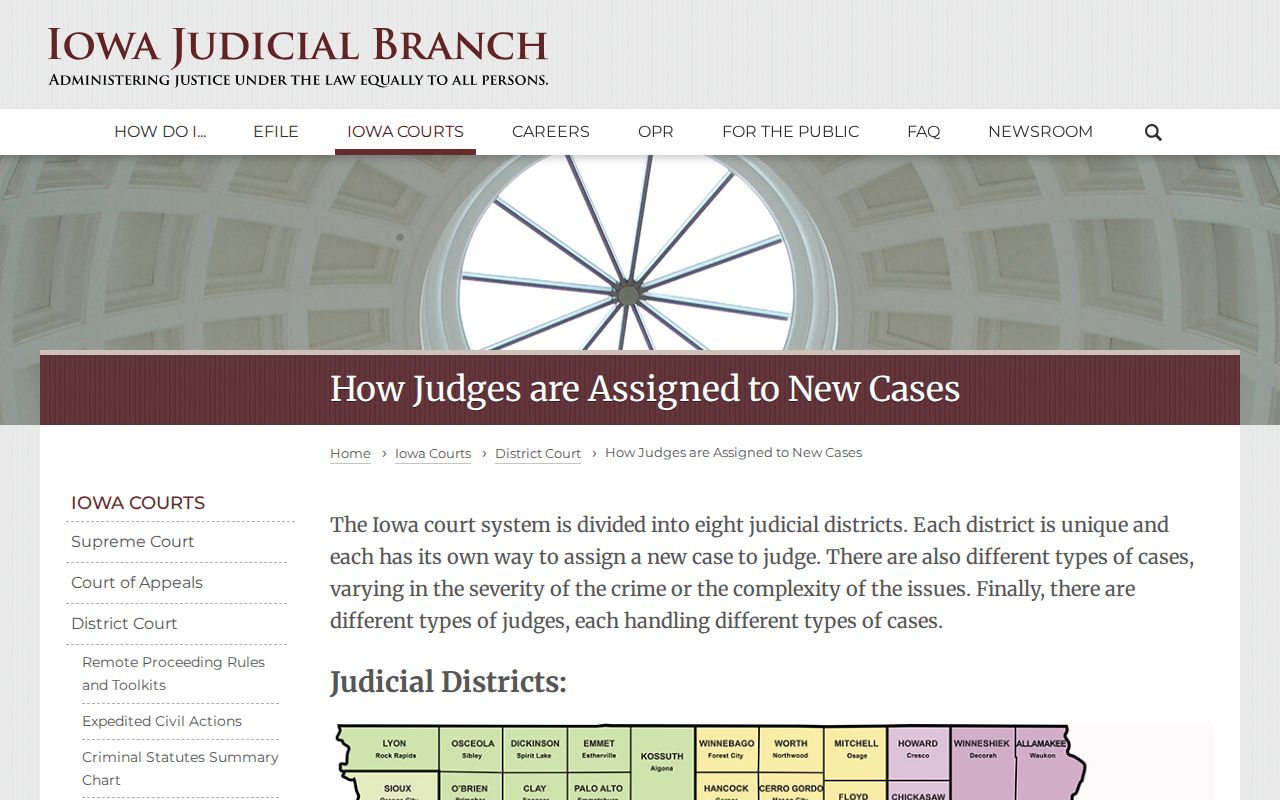
Assignment and venue decide which Lee County clerk can explain a recorded warrant event. There is no separate city-court criminal warrant archive.
How Lee County Arrest Warrants Are Served
An Iowa arrest warrant runs to peace officers anywhere in the state. Who serves it depends on the case: the Lee County Sheriff, the Fort Madison or Keokuk police, another city department, the Iowa State Patrol, or another authorized officer. LeeComm at 319-372-1310 routes non-emergency calls, but it is not a public warrant database. After the arrest, the person may be booked, brought before a judge for an initial appearance, and given bond conditions under the warrant and judicial order. The sheriff office answers at 319-372-1152, and the jail at 319-376-2355. No office states warrant-surrender hours or accepted bond instruments, so call first.
Lee County Arrest Warrant Confirmation Chain
Search Iowa Courts Online by Lee County, case or citation number, charge type, or name. Read the chronology for the complaint, warrant, bond, arrest, return, recall, quash, and disposition. Then call Lee North at 319-372-3523 or Lee South at 319-524-2433, depending on venue. Ask whether the warrant is still active and which agency holds it.
Confirm two records: The clerk explains the court docket, while the sheriff, jail, or issuing police agency addresses enforcement and custody.
A no-result public search does not establish that no warrant exists.
Arrest Warrant vs Summons vs Bench Warrant
Each tool has a different trigger and response. Iowa can issue a citation instead of a warrant in authorized situations. Bench warrant is the everyday label for court-triggered process. Section 805.5 itself calls an FTA instrument an arrest warrant.
| Feature | Arrest Warrant | Summons or Citation | Bench or FTA Warrant |
|---|---|---|---|
| Command | Officer makes an arrest | Person appears or responds | Officer arrests after missed obligation |
| Basis | Probable cause | Authorized alternative to custody | Failure to appear or court noncompliance |
| Response | Counsel, surrender, bond, court | Appear as directed | Clerk instructions, motion, appearance, surrender |
Bond After a Lee County Arrest Warrant
Iowa's uniform bond schedule can cover limited after-hours releases for stated offenses when court is not in session. Forcible felonies and listed special offenses need judicial review. Once a judicial officer sees the person, bond is discretionary under Iowa Code section 811.2 and no longer follows the uniform schedule. Ask the clerk for the warrant endorsement or the actual bond order. Ask the jail where bond is taken, during which hours, what identification to bring, which instruments are allowed, and whether a licensed surety is permitted. The Lee County sheriff page posts no online warrant-bond portal, bond-window hours, or local payment-method list. Paying court debt is not posting bond, and it does not end the criminal case.
Federal Layer of Lee County Arrest Warrants
Federal cases from Lee County go through the Southern District of Iowa. The U.S. Marshals Service, with its Southern Iowa Fugitive Task Force, chases federal fugitives and sometimes violent state or local ones. That role does not turn the federal office into a public warrant-search portal for the county. A state court case stays with the Lee County clerk and the Iowa agencies already involved, unless official records show federal jurisdiction. The Southern District of Iowa court locations page lists each federal courthouse with its public hours.
PACER handles federal case searches, not Lee County state warrants. Check the jurisdiction before you pay any federal access fee or call a federal office.
What to Do If There's a Warrant for You
Write down the case number, issuing venue, offense description, issue date, and any bond amount. Then call the right Lee County clerk and think about hiring counsel before you arrange an appearance. Ask the court whether a motion to recall or quash is available, whether an attorney can appear for you, or whether voluntary surrender and bond are required.
Act carefully: Discuss voluntary surrender, posting bond, and any motion to recall or quash with an attorney and the issuing court.
If a Lee County judge directs you to surrender, phone the jail before you go; intake rules change, and a call saves a wasted trip. Once you appear or post an authorized bond, get the paperwork from the court or jail and then confirm the update with both the clerk and the enforcing agency. Remember what a bond does. It secures your appearance, and it does not dismiss the charge underneath it. The same caution applies to court debt: paying off a balance will not automatically recall an outstanding arrest warrant.
Access Limits on Lee County Arrest Warrants
Iowa's Open Records Law gives you the right to examine and copy public records unless a specific exception applies, and Iowa Code section 22.7 can shield ongoing investigative reports and criminal-identification files even though current and prior arrest and criminal-history categories count as public. Juvenile justice records are generally confidential. Sealed material stays sealed. A focused Lee County sheriff records request can reach a releasable record, but nothing about it is instant. Lee County gives the first 30 minutes of preparation free, may bill time beyond that, describes normal processing within 10 business days, and allows up to 20 calendar days for a confidentiality decision. For a current arrest-warrant status question, calling the clerk and the agency directly remains the faster official route.
Lee County Arrest Warrant Record Requests
The Lee County Sheriff records-request process is the right tool when the public docket and a direct call fail to produce a releasable document you actually need. Fill out the general form with your contact information, signature, date, and a specific description in the all-other-records field. For an arrest-warrant matter, name the subject and include any approximate date, case number, citation number, or issuing agency you know. Say whether you want current status or a copy of a defined record. The form posts no warrant-number requirement and no subject-only restriction. Lee County waives the first 30 minutes of preparation and bills later staff time. Printed or faxed copies run $1 per page, and a CD, DVD, or flash drive costs $5, while email delivery may dodge paper and media fees. Ordinary processing falls within 10 business days, a good-faith confidentiality review may take up to 20 calendar days, and a broad or difficult request can run longer.
Access still has limits, and a denial is not proof a warrant exists. Ongoing investigative material, criminal-identification files, juvenile records, and sealed court records can all be withheld, and a custodian may release only part of a record or cite an exception. When information is denied, ask for the written statutory basis. Treat the request route as documentation, not urgent advice. For a live warrant question in Lee County, call the issuing clerk and the responsible agency, and bring in counsel; the clerk identifies the court order, while the sheriff, jail, or police agency handles enforcement and custody. Compare both answers after any court action so a recall, quash, service, or return is reflected wherever officers rely on it.
Official Lee County Arrest Warrant Sources
The Lee County Sheriff's official page posts the general office, jail, and dispatch contacts for enforcement and custody questions. It offers no warrant roster and no promise of telephone confirmation. Pair it with the District Court docket and the correct clerk rather than treating it as a substitute for either. If two offices give you different status answers, take the discrepancy back to the issuing clerk and ask how the controlling court order reaches the agency.
Lee County Arrest Warrant Court Contacts
The official Lee North court page covers the Fort Madison clerk, and the Lee South court page covers the Keokuk clerk. Each page lists its own location and phone details. Pick the venue named on the case, then turn to the sheriff source for enforcement questions, so nobody lands in the wrong Lee County building.